the drive up

Finding your way to the orchard.

Drive times from the nearest airports, arrival directions, parking, what to expect at the gates, and how each season shapes the journey.
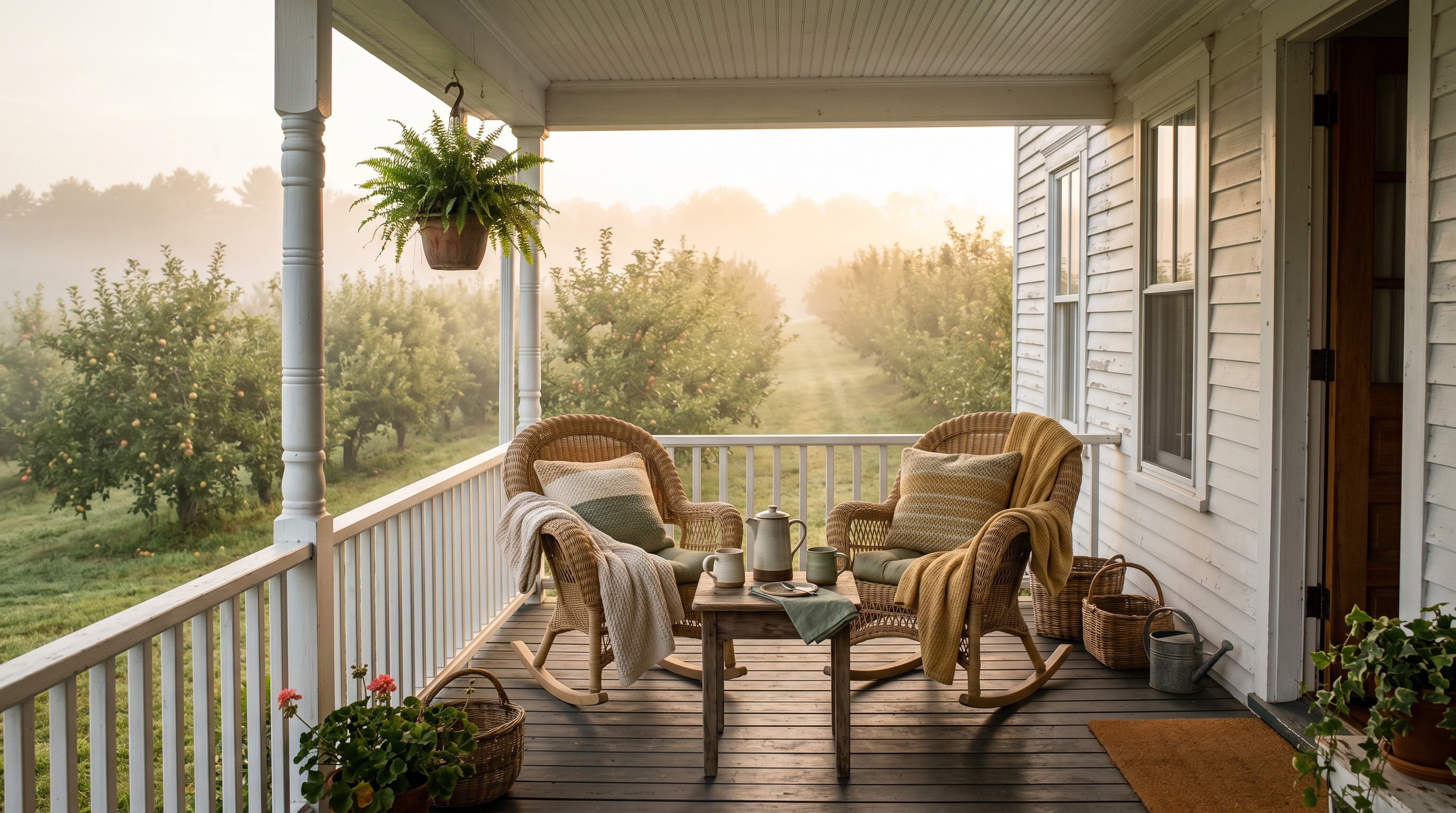
The farmhouse porch, waiting for arrivals
By air

The airports that serve the Leelanau Peninsula.

TVC — Traverse City
25 min
Cherry Capital Airport · Direct flights from Chicago, Detroit, Minneapolis, Charlotte, and more. The most convenient airport for most groups — small terminal, easy rental cars, no traffic.
GRR — Grand Rapids
2.5 hrs
Gerald R. Ford International · A larger hub with broader flight options. More direct routes from the coasts and South. About two and a half hours south on US-131 and M-72.
DTW — Detroit
4.5 hrs
Detroit Metro · The major Michigan hub. Most flight options, but the drive is a commitment — 4.5 hours via US-131 or I-75 to US-127 to M-72. A beautiful drive through the state; many groups make it part of the journey.
ORD — Chicago O'Hare
5.5 hrs
For groups flying in from the coasts, Chicago is often the best connection. The drive north through western Michigan along US-31, around the lake, is scenic and manageable.
Group shuttle service: We work with Traverse Charter Shuttle, who can pick up the full group at Traverse City Airport (TVC) and deliver everyone to Cedarwick's door — up to 14 passengers in one vehicle. Ask us about this when you inquire and we'll make the intro.
By car

The last 25 minutes — the best part of the drive.

Once you're north of Traverse City and across the bridge onto the Leelanau Peninsula, the character of the road changes entirely — two-lane county roads through orchards and vineyard rows, the bay visible through the trees. Your guests will arrive already unwound.

  1. Head west on US-31 / M-72 from Traverse City
  2. Cross the bridge at Suttons Bay onto the Leelanau Peninsula
  3. Turn north on M-204 / County Road 641
  4. After 8 miles, look for the cedar-post sign reading Cedarwick on the left
  5. Follow the gravel lane 400 yards through the orchard to the farmhouse
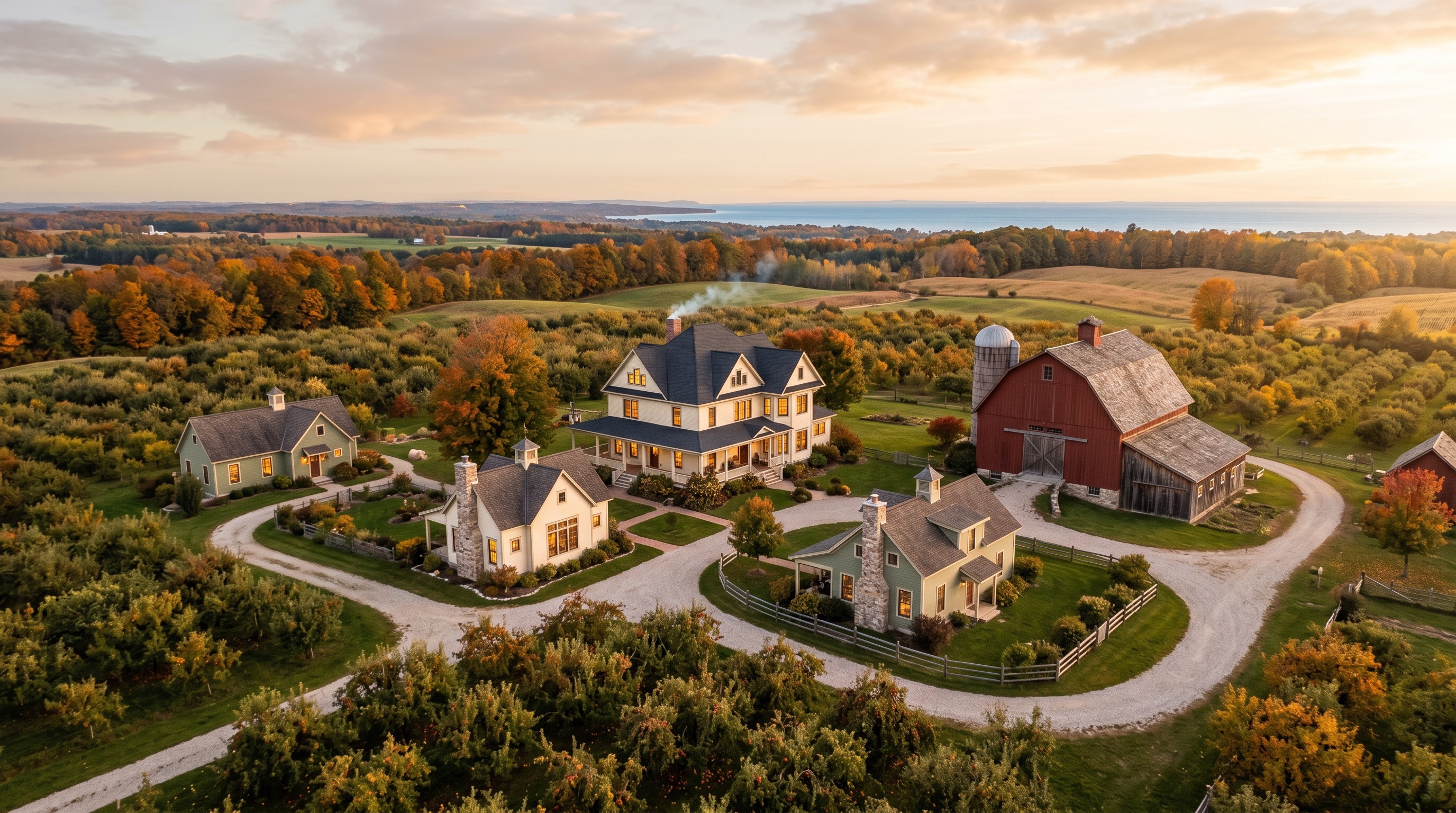
We'll send confirmed guests a GPS-friendly address and a detailed arrival map in your booking confirmation. Cell service can be patchy on the final mile — download the map offline before you leave town.
The lane into Cedarwick — orchard rows on both sides approaching the farmhouse
the lane into Cedarwick400 yards of orchard to the farmhouse door
Parking

Room for the whole group to arrive at once.

  • On-property gravel parking area fits up to 12 vehicles comfortably
  • No street parking or permit required — all parking is on-site and private
  • RVs and trailers: space available for up to 2 with advance notice
  • Van or bus arrivals: the lane and parking area accommodate standard passenger vans (15-seat) with a three-point turn at the turnaround
  • Accessible parking: one level-surface parking space nearest the farmhouse main entry

For large groups arriving by carpool or van, we recommend staging arrivals over a 30-minute window. Tom will be at the farmhouse for orientation when you arrive.

Accessibility & terrain

What the property is like on the ground.

We want every guest to be able to participate fully. Here's an honest picture of the property's terrain and what we can accommodate:

Farmhouse — main floor

Step-free entry via the main door ramp. All main-floor common areas (kitchen, dining, sitting room, half bath, porch) are accessible with a standard wheelchair or mobility device, and one main-floor bedroom has an en-suite bath. Ground-level gravel parking directly adjacent to the main entry.

Farmhouse — upper floor

Six of the seven farmhouse bedrooms are on the upper floor, accessed by a standard interior staircase (12 steps, handrail both sides). There is no elevator. The two garden cottages are ground-level with step-free entry. Guests with limited stair mobility should discuss room preferences before booking — the cottages and the main-floor bedroom are our most accessible sleeping options.

The barn

Single-level, step-free access via a wide gravel path from the farmhouse. The barn entry is a double door (no threshold). All session, dining, and movement space is on one level. Fully accessible for wheelchairs and mobility devices.

The orchard & grounds

The orchard walking paths are mowed grass and compacted gravel — accessible for steady walkers and some mobility devices, but not paved. The fire pit area is level grass. We're an authentic working orchard, not a manicured resort — some natural unevenness throughout.

Please tell us: If any member of your group has accessibility needs — mobility, sensory, dietary, or other — let us know when you inquire. We want to set expectations honestly and make real accommodations where we can. There are no awkward conversations here, only practical ones.
By season

What to expect when you arrive, in any month.
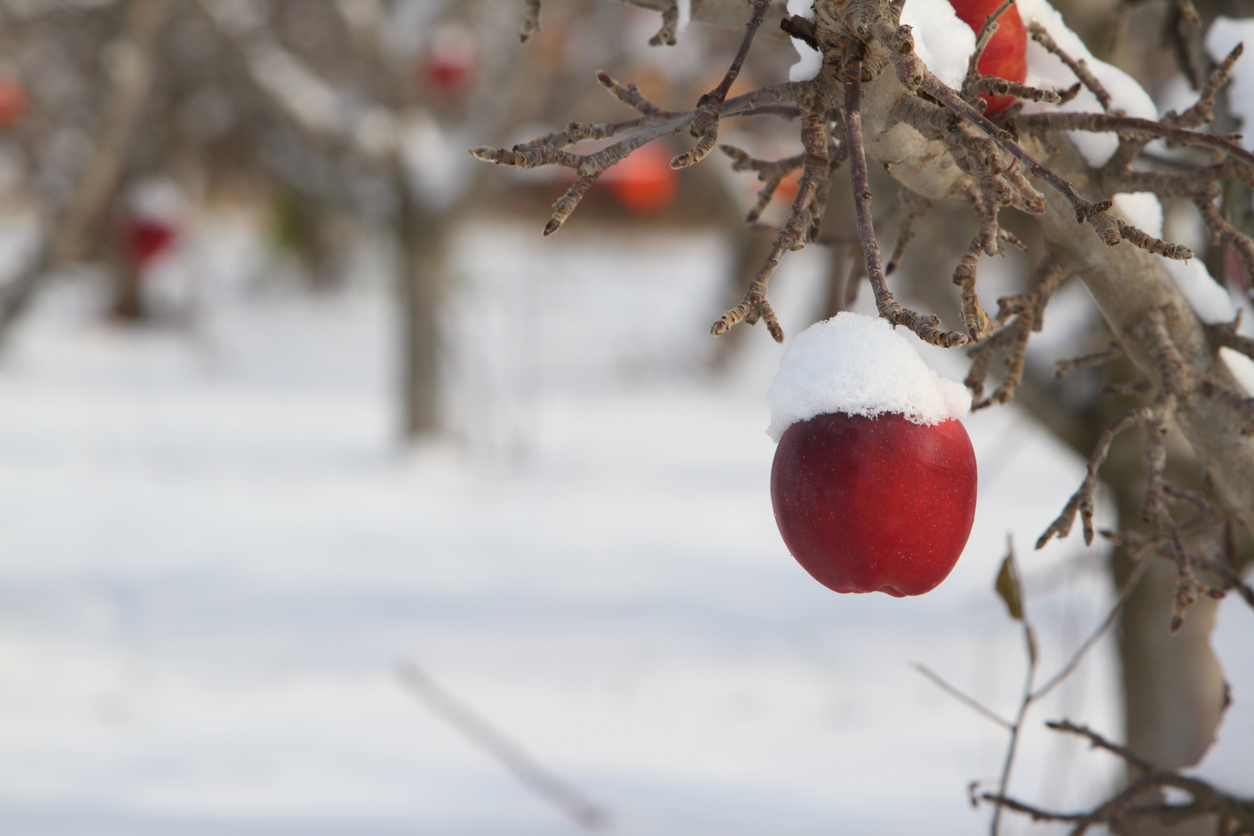
Winter in the orchard — a snow-capped apple still on the branch, orchard rows behind
Winter (Dec–Mar)
The Leelanau Peninsula gets 80–100 inches of snow per year. Roads are maintained but the final lane to the property may have snow cover. All-wheel or front-wheel drive recommended in January–February. Allow extra arrival time. Inside: the best fires, the quietest landscape.
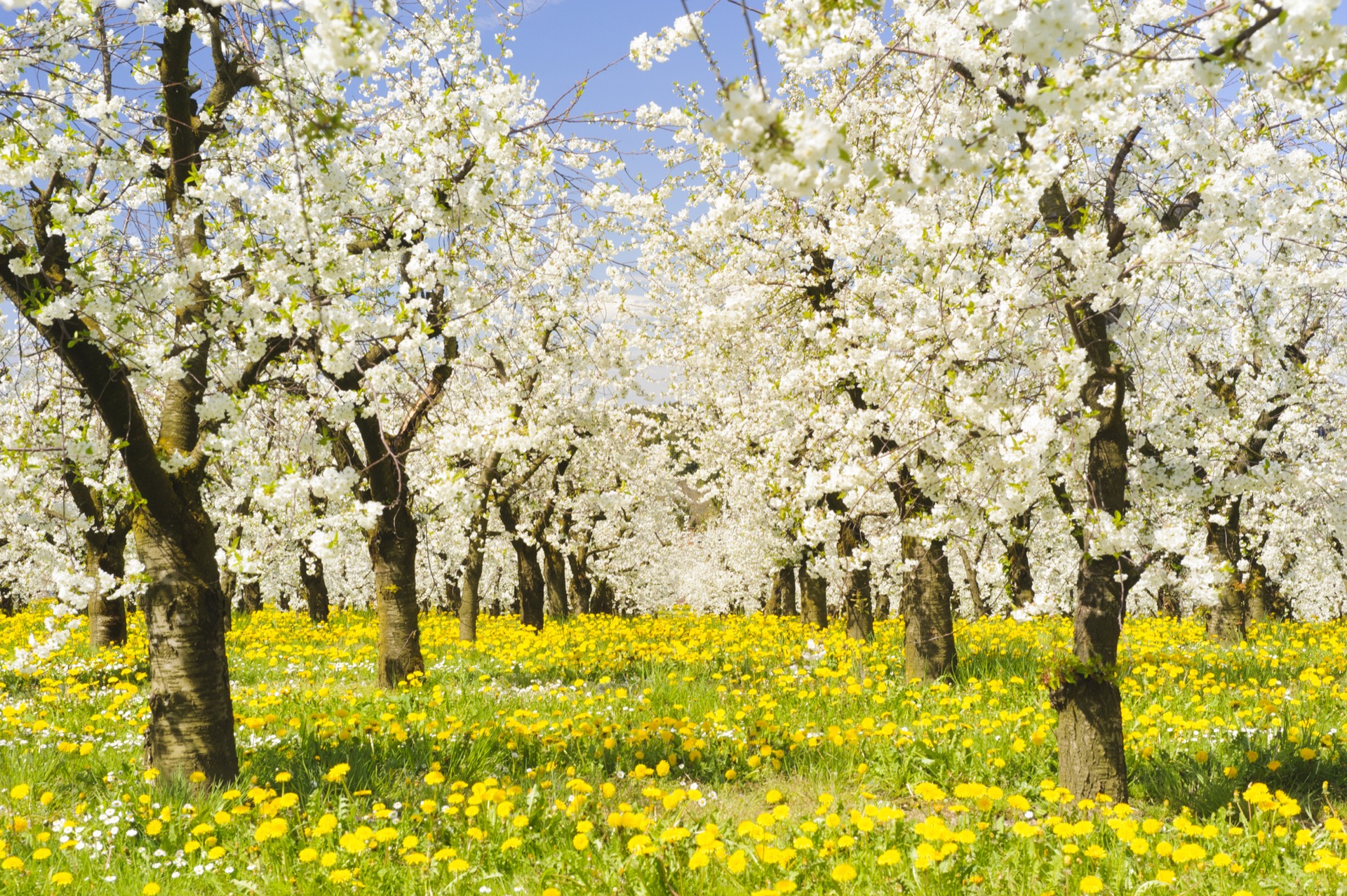
The orchard in full blossom — white petals over a dandelion meadow
Spring (Apr–May)
April can be muddy — the gravel lane handles it, but expect it. May is one of the most beautiful months in northern Michigan: cherry and apple blossoms, warming air, green coming back everywhere. Migrating birds. Occasional cool rain.
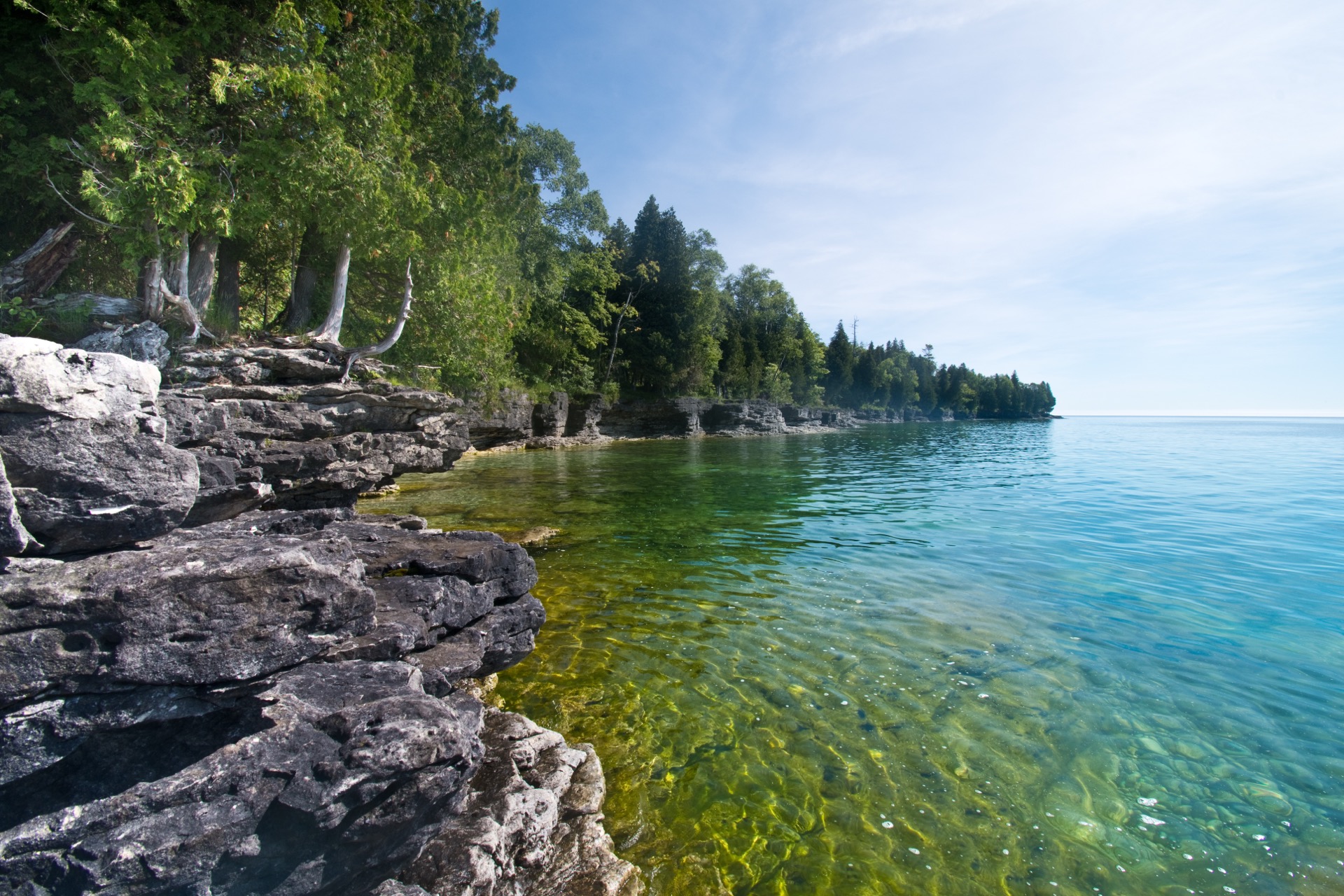
Lake Michigan in summer — clear green water along the cedar shoreline
Summer (Jun–Aug)
Long days, warm evenings, the barn doors thrown open to the orchard breeze. July is cherry harvest — the peninsula is buzzing. Traffic on M-22 can slow on summer weekends; plan your arrival-day drive — Thursday for a four-day stay, Saturday for a seven — for after 4 PM or before 1 PM. The best time to leave the barn doors open all day.
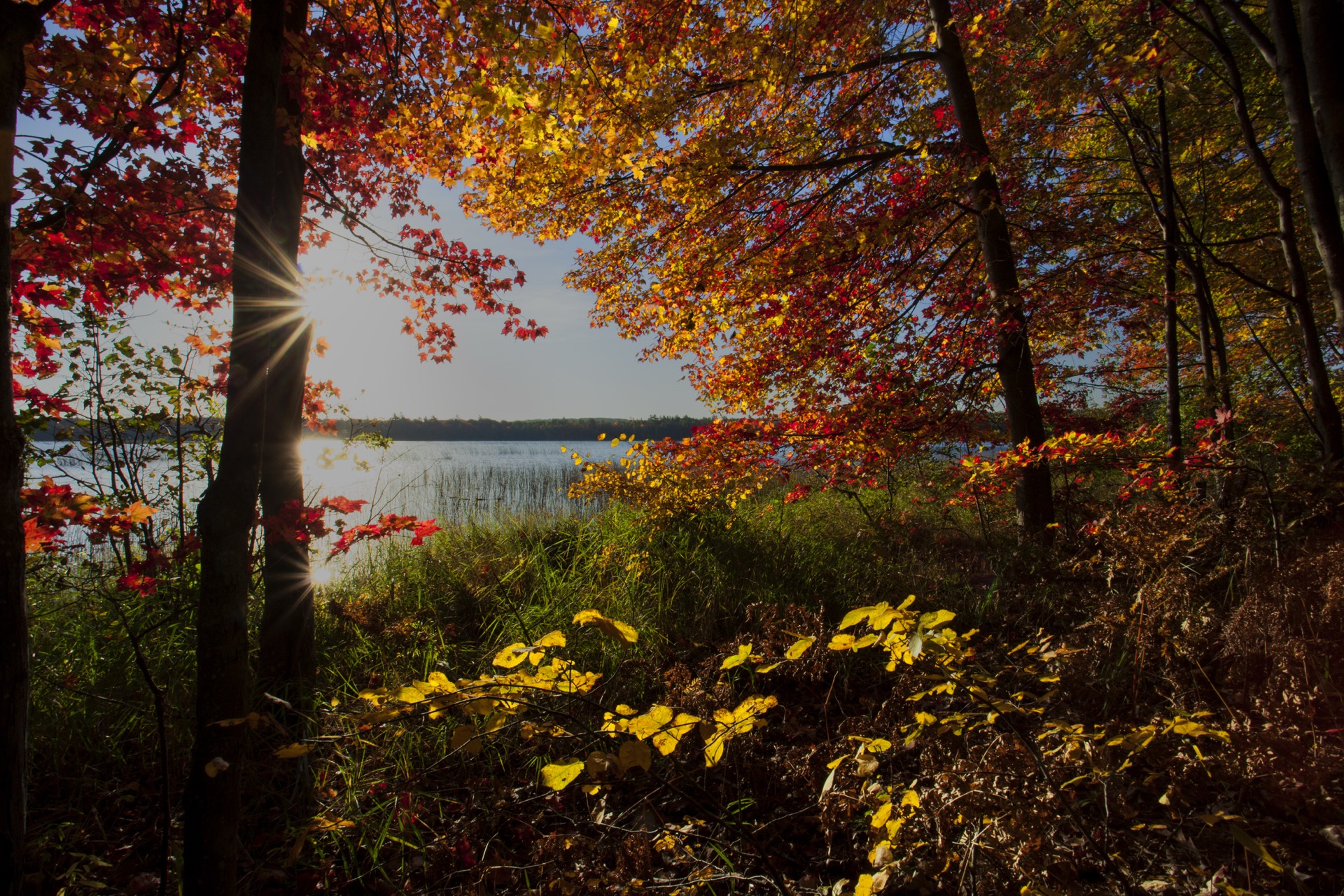
Autumn arrival — fall color over the lake, harvest mood
Autumn (Sep–Nov)
September and October are many guests' favorite months. Apple harvest, the vines turning, the first fires. Peak color is typically mid-October. November quiets completely — the tourists are gone, the wineries are less crowded, the light is extraordinary. The off-season begins in the most beautiful possible way.
Ready to find your week?

Check availability — we'll hold it while you decide.

Check available dates →